Rain Barrels and Greywater for Beginners
A rain barrel collects water from your roof's downspout so you can use it on plants, and greywater is gently used water from showers, bathroom sinks or the washing machine that some homes reuse in the yard. Both can reduce how much tap water goes to outdoor use, but rules vary by state and city, and neither is safe to drink. Check your local rules first, keep it simple, and leave any plumbing changes to a licensed plumber.
Reusing water is the most hands-on part of our Saving Water section, and it's usually best tackled after you've fixed leaks and tuned your indoor habits.
Rainwater basics
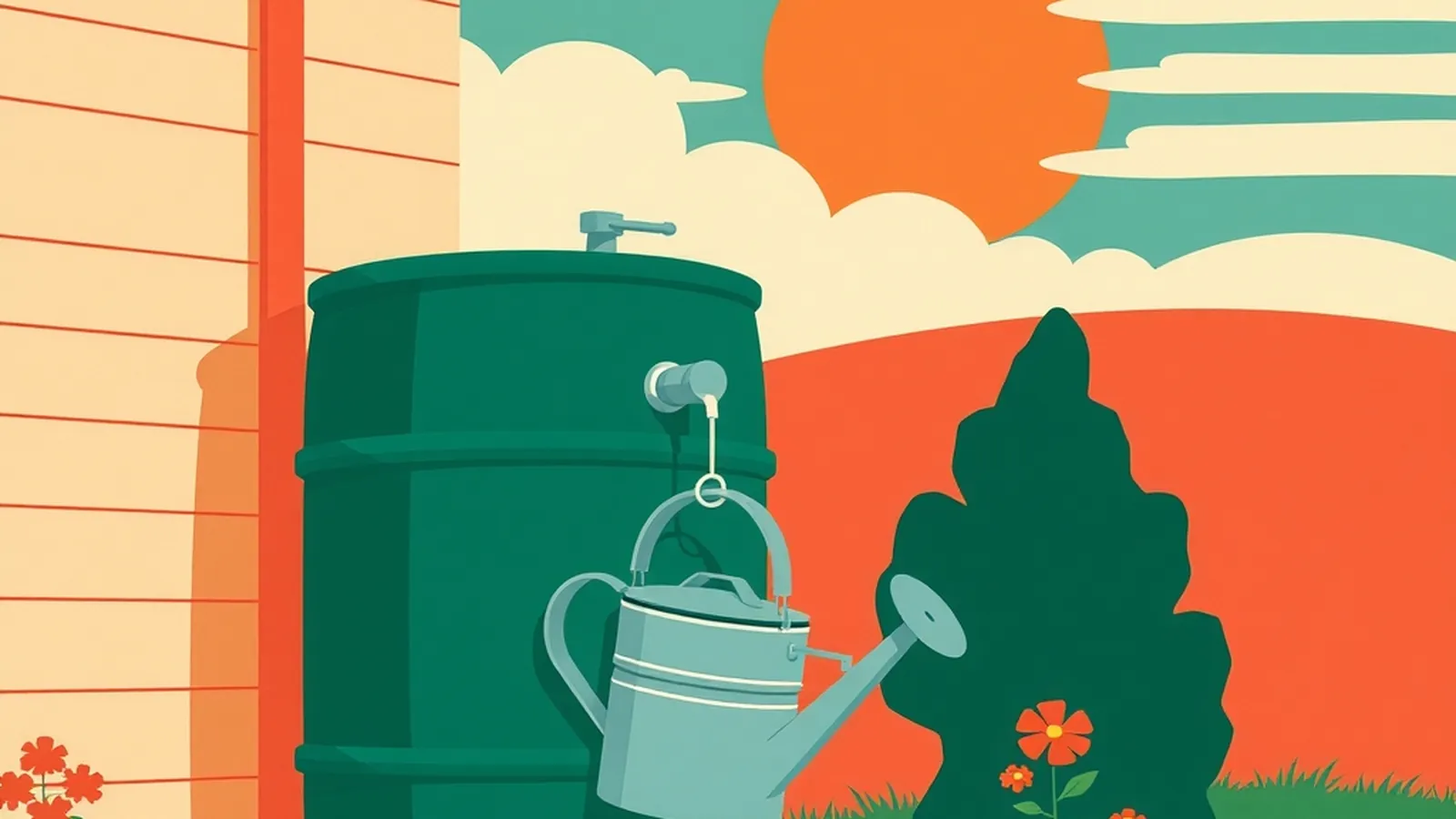
When rain hits your roof, it runs into gutters and down a downspout. A rain barrel sits under the downspout and catches some of that water. A screened lid keeps out leaves and insects, a spigot near the bottom lets you fill a watering can or attach a hose, and an overflow outlet sends extra water away from your foundation.
Check the rules first
Rainwater collection is encouraged in some states and limited in others. Some places cap how many gallons you can store, require a certain kind of container or restrict what the water can be used for. HOAs and lease agreements may have their own rules about how barrels look and where they go. Before you buy anything:
- Search your state's environmental, water resources or natural resources agency for rainwater harvesting rules.
- Check with your city or county, since local rules can be stricter.
- Read your HOA rules or ask your landlord.
- Ask your local Cooperative Extension office, which often has free guides on rain barrels for your area. Our free resources guide explains how to find yours.
Setting up a rain barrel
- Pick a downspout near the plants you want to water and on level ground.
- Build a sturdy, level base, such as solid blocks or pavers. A full barrel is very heavy, so the base needs to be stable.
- Raise the barrel a bit so a watering can fits under the spigot and gravity helps the flow.
- Cut or divert the downspout to feed the barrel, following the barrel maker's instructions.
- Route the overflow away from the house's foundation and your neighbor's property.
- Keep the lid closed and screened so mosquitoes can't breed and children and pets can't get in.
Using rainwater well
- Use it on ornamental plants, lawns and potted flowers first.
- For edible plants, many Extension offices suggest applying it to the soil rather than the leaves and washing produce well with tap water before eating. Ask your local office for its guidance, since recommendations vary by roof type and region.
- Use it up between storms so the barrel has room for the next rain and water doesn't sit too long.
- Clean the screen and gutters a few times a year.
- Drain and store the barrel before freezing weather if your winters get cold, or follow the maker's winter instructions.
Greywater basics
Greywater is water that's been used once for washing: shower and tub water, bathroom sink water and washing machine water. It doesn't include toilet water, which is called blackwater. Many codes also treat kitchen sink and dishwasher water differently because of food scraps and grease, so check how your area defines it.
Rules vary even more
Greywater is more regulated than rainwater because it can carry soap, skin oils, lint and bacteria. Some states allow simple systems, such as a laundry-to-landscape setup, without a permit if they meet certain conditions. Others require permits for any system, and some restrict greywater reuse heavily. Check with your state and local building or health departments before you start.
Greywater ground rules
These general guidelines show up in many state rules, but your local rules come first:
- Don't store greywater. It can turn smelly and grow bacteria quickly. Send it to the landscape the same day.
- Send it below mulch or soil, not into sprays or puddles where people or pets touch it.
- Avoid using it on root crops and leafy greens you eat raw.
- Keep it out of storm drains, creeks and neighbors' yards.
- Switch to plant-friendly soaps. Some detergents contain salts or boron that can build up in soil. Look for products whose labels say they're suitable for greywater use.
- Divert to the sewer when you wash diapers, use bleach or clean with harsh products.
Any greywater system that changes your home's drain plumbing should be designed and installed by a licensed plumber, with permits where they're required.
Rainwater and greywater aren't drinking water
Neither rain barrel water nor greywater is safe to drink, cook with or use for brushing teeth. A home filter designed for tap water is not built to make them safe. Our water filter guide covers filters for treated tap water. For drinking water during outages, set aside clean stored water instead, as our emergency water storage guide explains.
Where the water goes next
Rainwater works best in a garden that's set up to use it well. Healthy, compost-rich soil soaks up and holds water longer, which our organic gardening basics guide covers. And a rain barrel tends to get used most when it's part of a routine, which is the focus of our water-wise habits guide.
Worked example
Example: Avery owns a small house with a vegetable bed and a flower border. After checking that their state allowed residential rain barrels, they set one on a block base by the downspout nearest the flowers, screened the lid and routed the overflow to a gravel patch. They use the rainwater on flowers and the soil around their tomatoes, and still water the lettuce with the hose. They decided greywater wasn't worth a permit for now.
Quick safety checklist
- The barrel lid is closed, screened and secure.
- The base is level and stable.
- The overflow runs away from foundations and neighbors.
- Nobody drinks, cooks with or bathes in collected water.
- Any greywater goes straight to the landscape and isn't stored.
Something to do this weekend
Look up your state's rainwater collection rules and your local Extension office's rain barrel guide. Then walk around your house during or after the next rain and note which downspout carries the most water and which plants sit closest to it. That spot is your best candidate.
Want a step-by-step plan or guide?
Some people like the structure of a paid guide or set of plans. This button opens a third-party program from one of our advertising partners. Its claims are its own, not ours, so weigh them against our checklist for judging paid plans.
See the partner program →We may be paid when you click. The program shown can change. Read its terms before you buy anything. How this works
Frequently asked questions
Are rain barrels legal?
In many places, yes, but rules vary by state and sometimes by city or HOA. Some areas limit how much you can collect or how you can use it, so check your state and local rules before you set one up.
Can I drink rainwater from a rain barrel?
Treat rain barrel water as non-drinking water. Roofs, gutters and barrels can add dirt, bird droppings and other contaminants. Use it for ornamental plants, rinsing tools and similar outdoor jobs.
Can I use greywater on my garden?
Sometimes, depending on where you live. Many states allow some greywater reuse under specific rules, while others restrict it. Simple systems may need a permit, and plumbing changes should be done by a licensed plumber.