How to Find and Check the Correct Tire Pressure
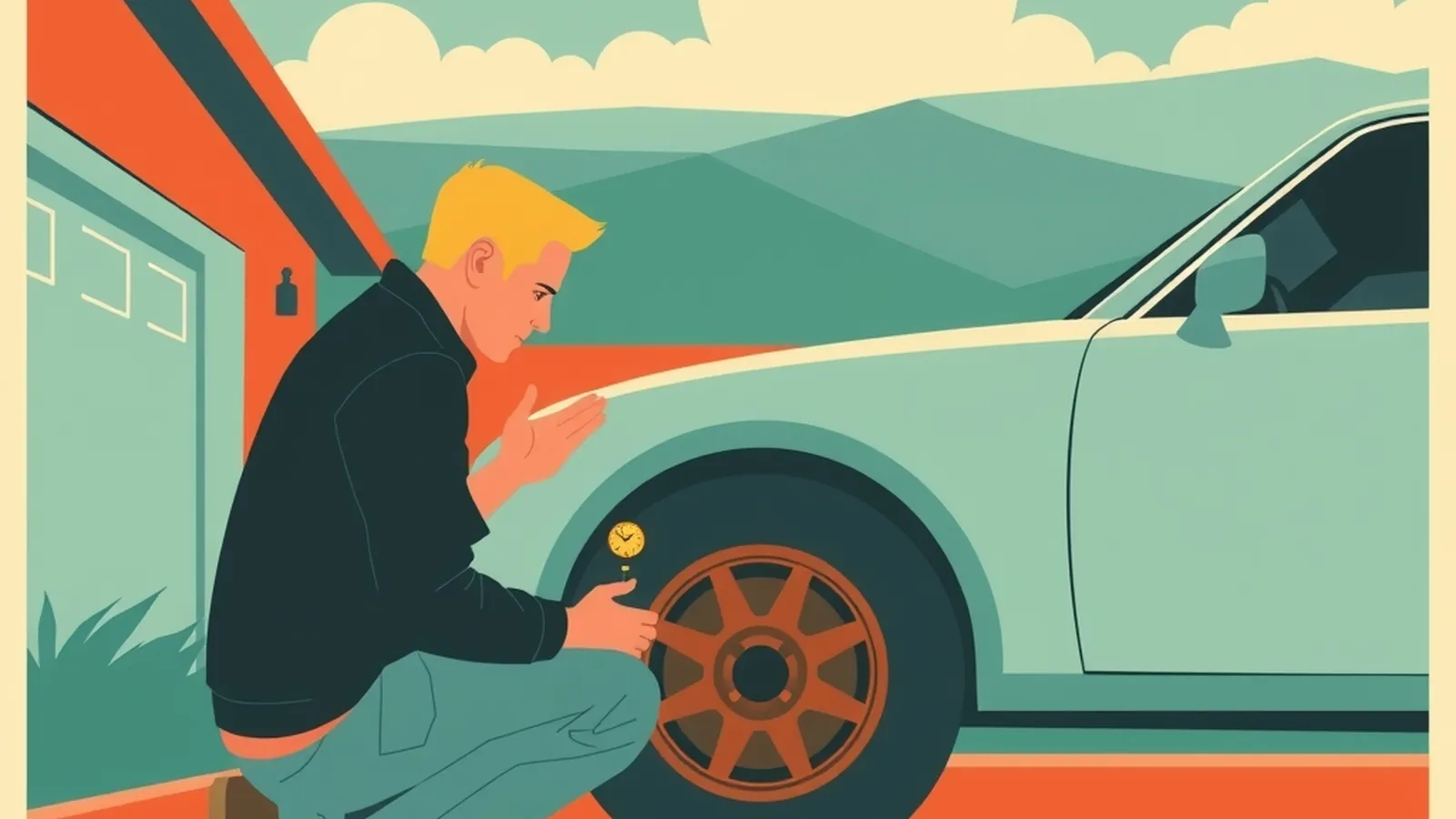
The correct tire pressure for your car is printed on a placard on the driver's side door jamb and listed in your owner's manual. It is not the number on the tire's sidewall, which is the maximum the tire can hold. NHTSA recommends checking your tires at least once a month, when they're cold, meaning before you've driven or after the car has sat for a few hours.
It's a five-minute job, and one of the easiest switches in our Getting Around section, with benefits for safety, tire life and fuel use.
Why tire pressure matters
Properly inflated tires do a lot of quiet work for you:
- Safety. Tires at the right pressure grip the road, brake and handle the way the car was designed for. Underinflated tires can overheat and are more likely to fail.
- Tire life. Too little or too much air causes uneven wear, which can mean replacing tires sooner.
- Fuel use. Underinflated tires create more rolling resistance, so the engine works harder. Keeping them at the right pressure is a simple part of driving efficiently.
- Comfort. Correct pressure gives a smoother, more predictable ride.
Finding your number
There are two places to look, and one place not to:
| Where | What it tells you | Use it? |
|---|---|---|
| Driver's door jamb placard | The recommended cold pressure for front and rear tires, set by the vehicle maker | Yes |
| Owner's manual | The same recommendation, sometimes with notes for heavy loads | Yes |
| Tire sidewall | The maximum pressure the tire can safely hold | No, not as your target |
Open the driver's door and look along the edge of the door or the frame for a sticker. Some vehicles list different pressures for the front and rear tires, and some list a separate pressure for the spare. If the placard is missing or hard to read, check the owner's manual or ask a tire shop.
If you've replaced your tires with a different size than the car came with, ask the tire shop what pressure they recommend for that setup.
What "cold" means
Tire pressure rises as tires warm up from driving. That's why the recommended number is a cold pressure. For an accurate reading, check:
- First thing in the morning before driving, or
- After the car has been parked for a few hours, out of direct sun if possible.
If you have to check after driving a short distance to an air pump, the reading may be a little high. Don't let air out to match the placard while the tires are warm; recheck when they're cold.
How to check and fill your tires
You'll need a tire pressure gauge. Many gas stations have air pumps, and some have built-in gauges, but a small gauge of your own is more consistent.
- Find your target pressure on the door jamb placard.
- Remove the valve cap from the first tire and keep it somewhere safe.
- Press the gauge firmly onto the valve stem until the hissing stops, then read the gauge.
- Compare the reading with the placard.
- Add air if it's low. Press the air hose onto the valve in short bursts, checking with the gauge as you go.
- Let a little air out if it's high by pressing the small pin in the center of the valve, then recheck.
- Replace the valve cap.
- Repeat for all four tires, and check the spare if your car has one.
While you're down there
Take an extra minute to look over each tire:
- Tread. Worn tread reduces grip, especially in rain and snow. Many tires have wear bars molded into the grooves that show when it's time to replace them. A tire shop can measure tread for you.
- Damage. Look for bulges, cracks, cuts or objects stuck in the tread.
- Uneven wear. Wear on just the edges or just the center can signal a pressure or alignment problem.
If you see damage or a tire keeps losing air, have it inspected by a tire professional.
Seasonal changes
Tire pressure tends to drop when the weather gets colder, so a tire that was fine in late summer may be low after the first cold snap. Add a check whenever the season changes, and before any long road trip, especially if the car will be loaded with people and luggage. Our green travel guide has more tips for road trips and vacations.
A note on nitrogen and gadgets
Some shops offer nitrogen fills, and you may see gadgets or apps that promise to take the guesswork out of tire care. Regular air works fine for most passenger cars, as long as you keep it at the right pressure. Whatever is in your tires, the monthly check with a gauge is still what matters most.
Make it a habit
Monthly checks are easy to forget. A few ways to make them stick:
- Pair it with something you already do, like the first fill-up of each month.
- Keep the gauge in the glove box so it's always with the car.
- Set a monthly reminder on your calendar.
- Check the whole household's vehicles at once.
This kind of habit-stacking works for home tasks too. Our energy saving tips guide uses the same idea with a room-by-room checklist for using less energy at home.
Example: a first-of-the-month check
Example: Taylor, a fictional commuter, never checked tire pressure and only noticed when the warning light came on. Now they keep a gauge in the glove box and check all four tires on the first Saturday of each month, before running errands. The first time, Taylor found one tire noticeably low and a nail in the tread, which a tire shop repaired. The check now takes them just a few minutes.
How this fits with other driving habits
Tire pressure is just one part of using less fuel. Our fuel-efficient driving guide covers smooth driving, less idling and lighter loads. And if you can share some trips, carpooling and transit explains how to find options near you.
Do this weekend
Buy or borrow a tire gauge, find your door jamb placard and check all four tires plus the spare before your first drive of the day. Write the target pressure on a note and keep it with the gauge.
Want a step-by-step plan or guide?
Some people like the structure of a paid guide or set of plans. This button opens a third-party program from one of our advertising partners. Its claims are its own, not ours, so weigh them against our checklist for judging paid plans.
See the partner program →We may be paid when you click. The program shown can change. Read its terms before you buy anything. How this works
Frequently asked questions
Where do I find the correct tire pressure for my car?
Look for the placard on the driver's side door jamb, or check your owner's manual. The number molded on the tire's sidewall is the maximum the tire can hold, not the pressure your car needs.
How often should I check my tire pressure?
NHTSA recommends checking at least once a month, when the tires are cold. It's also smart to check before a long trip or when the weather turns noticeably colder.
Can I rely on my car's tire pressure warning light?
The warning light is a helpful backup, but it may only come on once a tire is already quite low. A monthly check with a gauge catches problems earlier.