How to Save Gas When You Drive
To save gas, drive smoothly, avoid long idling, keep your speed steady, carry less weight, keep your tires properly inflated and combine errands into fewer trips. None of these require a new car. How much they help depends on your vehicle, your routes and traffic, but they're good habits that cost little or nothing.
Driving habits are the most widely useful topic in our Getting Around section, because they apply to nearly everyone who drives, whatever the car.
Use fueleconomy.gov to compare vehicles
fueleconomy.gov is the official US government source for comparing vehicle fuel economy. It's run by the Department of Energy with the Environmental Protection Agency. You can use it to:
- Look up your current car's official fuel economy estimates.
- Compare vehicles side by side if you're shopping, including gas, hybrid, plug-in hybrid and electric models.
- Read general fuel-saving tips from the government.
- Estimate fuel costs using your own driving distance and local fuel prices.
Official estimates are a starting point for comparison. Your real results will vary with how and where you drive, the weather and how well the car is maintained. Still, they're far more reliable than ads or general claims, and they put every vehicle on the same footing.
If you're considering a different type of car, our hybrid vs electric guide explains how the options differ.
Driving habits that help
Drive smoothly
Hard acceleration and sudden braking waste fuel. Try these instead:
- Press the accelerator gently when pulling away.
- Look well ahead so you can ease off early for red lights and slowdowns.
- Leave more space behind the car in front, so you aren't constantly braking and speeding up.
- Coast toward stops when it's safe.
Keep a steady speed
On the highway, steady speeds are usually more efficient than speeding up and slowing down. Cruise control can help on flat, open roads. Many cars also use more fuel at higher speeds, so driving at or a little below the speed limit can help.
Cut down on idling
An idling engine uses fuel without taking you anywhere. If you'll be parked and waiting for more than a short time, turn the engine off when it's safe. Never let a car idle in a closed garage, even briefly, because exhaust contains carbon monoxide.
Lighten the load
Extra weight makes the engine work harder. Clear out heavy items you don't need to carry every day, such as sports gear or bags of supplies. Roof racks and cargo boxes also add drag at highway speeds, so remove them when you're not using them.
Plan your trips
- Combine errands into one loop instead of several separate outings.
- Do the farthest stop first so the engine warms up, then work your way home.
- Avoid rush hour when you can, since stop-and-go traffic uses more fuel.
- Skip some trips altogether with delivery bundling, a shared ride or a walk.
Maintenance that helps
A well-maintained car tends to run more efficiently. Keep up with:
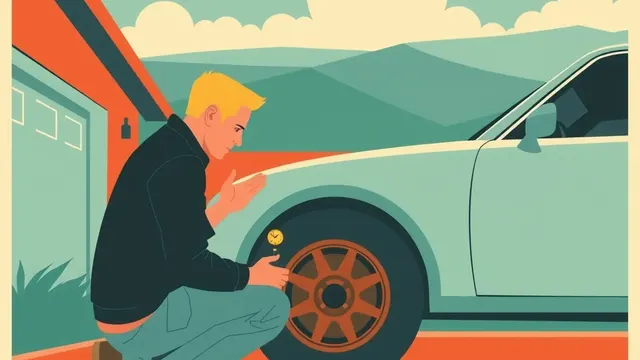
- Tire pressure. Underinflated tires can lower fuel economy and wear out faster. The right pressure for your car is on the driver's door jamb placard and in the owner's manual. Our tire pressure guide explains how to check it.
- Scheduled maintenance, following your owner's manual.
- The recommended grade of motor oil, as listed in your manual.
- Air filters and spark plugs, replaced on schedule.
- Warning lights. Get them checked rather than ignoring them.
Seasonal driving tips
Weather changes how your car uses fuel, so a few seasonal habits help:
- In cold weather, most modern cars don't need a long warm-up. Driving gently for the first few minutes usually warms the engine faster than idling in the driveway. Clear all snow and ice from windows, lights and the roof before you go, for safety.
- In hot weather, parking in the shade and venting the car for a moment before turning on the air conditioning can make the cabin comfortable sooner. At lower speeds, windows down may be a reasonable option; at highway speeds, open windows add drag, so the air conditioning may make more sense.
- Check tire pressure when the seasons change, since temperature swings affect it.
- Plan around weather. If a storm is coming, combine errands into one trip beforehand instead of making several in bad conditions.
Fueling up
A few small habits at the pump help too:
- Use the fuel grade your owner's manual recommends. Paying for a higher grade than your car needs usually doesn't add any benefit.
- Tighten the gas cap until it clicks, so fuel doesn't evaporate.
- Don't top off after the pump shuts off automatically; extra fuel can spill or be pulled back into the pump.
Be wary of fuel-saving gadgets
You may see devices, fuel additives or plug-in modules that promise dramatic fuel savings. Be skeptical. Claims like these are often hard to support, and some products may even harm your engine or void a warranty. Proven habits like the ones above are a safer bet. Our red flags guide explains how to spot too-good-to-be-true savings claims, fake urgency and fake reviews.
A weekly fuel-saving checklist
| When | What to do |
|---|---|
| Once a month | Check tire pressure when the tires are cold |
| Each week | Plan errands into one or two loops |
| Every drive | Accelerate gently, look ahead, keep a steady speed |
| When parked and waiting | Turn the engine off if it's safe |
| Once a season | Clear out extra weight and remove unused roof racks |
| As scheduled | Follow your owner's manual for maintenance |
Example: a smarter Saturday
Example: Pat, a fictional parent, used to make four separate trips on Saturdays: groceries, the hardware store, the pharmacy and a pickup at a friend's house. Now they plan a single loop, starting with the farthest stop and ending at the grocery store so cold items go straight home. They also took a heavy toolbox out of the trunk. Pat's car still uses gas, but those Saturday miles are fewer and smoother.
Drive less when you can
The most effective way to use less fuel is often to drive fewer miles. A carpool, a bus or train ride or a bike trip can replace some driving. Our guide to carpooling and transit explains how to find routes and ride shares, and our e-bikes guide covers electric-assist bikes for shorter trips.
Try this week
Pick one habit to practice on every drive this week: gentle starts, looking ahead to coast toward stops, or turning off the engine while waiting. Then look up your car on fueleconomy.gov so you know its official estimates.
Want a step-by-step plan or guide?
Some people like the structure of a paid guide or set of plans. This button opens a third-party program from one of our advertising partners. Its claims are its own, not ours, so weigh them against our checklist for judging paid plans.
See the partner program →We may be paid when you click. The program shown can change. Read its terms before you buy anything. How this works
Frequently asked questions
Does driving slower save gas?
In general, many cars use more fuel at higher highway speeds, so easing off a bit can help. Steady speeds and gentle acceleration also matter. How much it helps depends on your car and conditions.
Is idling bad for fuel economy?
An idling engine burns fuel while going nowhere. If you'll be parked and waiting for more than a short time, turning the engine off is usually a good habit when it's safe to do so.
Do gas-saving gadgets work?
Be skeptical of devices and additives that promise big fuel savings. Claims like that are hard to back up. Proven habits such as smooth driving and correct tire pressure are a safer bet.